Growing
How to Grow Basil from Seed in the UK: A Month-by-Month Guide
Basil is one of the easiest herbs to raise from seed, and one of the quickest to disappoint. The difference is almost always timing. Sow on a dim February windowsill and the seedlings stretch, flop and rot. Sow in late May and you are picking leaves within weeks. Get the calendar roughly right and a single packet of seed will keep you in fresh leaves from early summer into autumn, using nothing more elaborate than a warm windowsill, a few small pots and a sunny, sheltered corner outside.
February: get ready, but hold back on sowing
Basil germinates best at around 20°C and grows strongly between 18°C and 21°C. In February a UK windowsill often gives you the warmth but not the light. Short days and weak sun produce pale, leggy plants that never quite recover, however carefully you treat them afterwards. Unless you have a heated propagator and a genuinely bright south-facing window, it pays to wait. If you do want an early start, sow a small pinch in the last week of the month and be ready to pot on quickly.
Use the waiting time well:
- Buy fresh seed if your packet is more than a couple of years old — germination drops off with age.
- Pick varieties to suit your space: 'Sweet Genovese' for pesto, compact Greek bush basil for windowsills, 'Red Rubin' or Thai basil for colour and scent.
- Wash old pots and trays, and buy a fresh peat-free multipurpose compost.
- Work out which windowsill gets the most light, and clear it.
March and April: the main sowing window
This is when most British gardeners should sow. Fill small pots or module trays with moist compost and firm it gently. Basil seed is tiny and germinates best with some light, so sow thinly on the surface and cover with only a dusting of compost or vermiculite — a few millimetres at most. Three or four seeds to a 7cm pot is plenty.
Germination needs warmth: a propagator, a warm airing cupboard or the top of a fridge will do. Check daily and move the pots into bright light the moment the first seedlings appear, usually within five to ten days. A south-facing windowsill is ideal. Turn the pots every day or two so the stems grow straight rather than leaning, and water from below to keep the compost damp rather than soaked.
Potting on
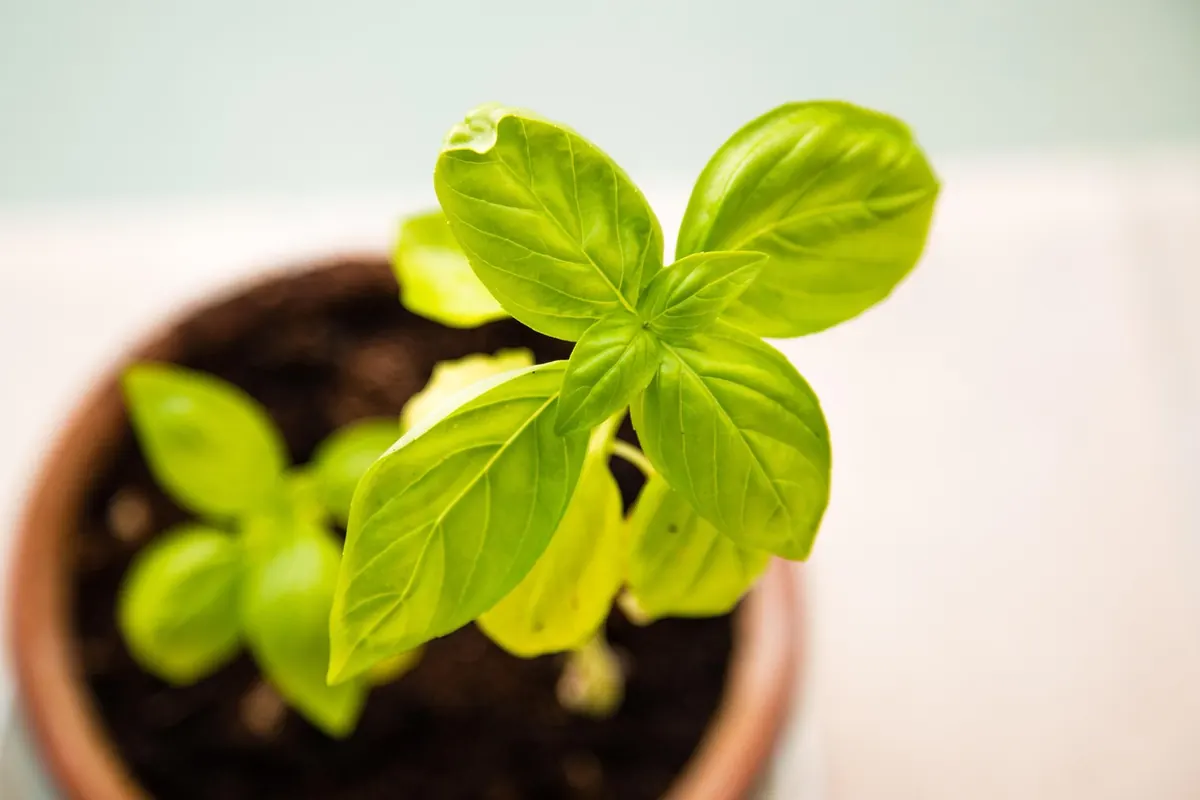
When seedlings have their first true leaves — the second pair to appear — move the strongest into individual 7–9cm pots, planting them slightly deeper than they were growing. Basil roots readily along a buried stem, which gives you sturdier plants. From here, sow another small pot every three or four weeks until July. Succession sowing is the simplest way to avoid a glut followed by a gap.
May: hardening off and planting out
Basil has soft leaves and no tolerance for cold. A night below 10°C will check it; a touch of frost will kill it. Even a healthy plant moved straight from a warm windowsill to an exposed garden will sulk for a fortnight. Hardening off closes that gap.
- About ten days before planting out, put the pots outside for an hour in a sheltered, lightly shaded spot.
- Add an hour each day, gradually moving them into more sun.
- Bring them in at night for the first week.
- In the second week, leave them out overnight once the forecast is reliably mild.
If in doubt, wait. Basil sown late will still crop well; basil planted into a cold snap usually will not.
Earliest safe planting-out dates
Treat these as guides rather than rules — the forecast matters more than the calendar.
- Southern England, London and mild coastal areas: mid to late May, once night temperatures stay above 10°C.
- Midlands, East Anglia and most of Wales: late May, sometimes the first days of June.
- Northern England, Scotland, Northern Ireland and upland areas: early to mid June.
Choose the sunniest, most sheltered spot you have. A south-facing wall, a warm patio or a large pot that can be moved under cover beats an open bed, especially in the north. Basil wants free-draining soil, so fork in some garden compost first and space plants 20–25cm apart, then water them in well.
June to August: pinching, picking and succession
Once a plant has four to six pairs of leaves, pinch out the growing tip just above a pair. This stops it running up into a single stem and encourages sideshoots — the difference between a plant you harvest from all summer and one that gives you six leaves and a flower spike.
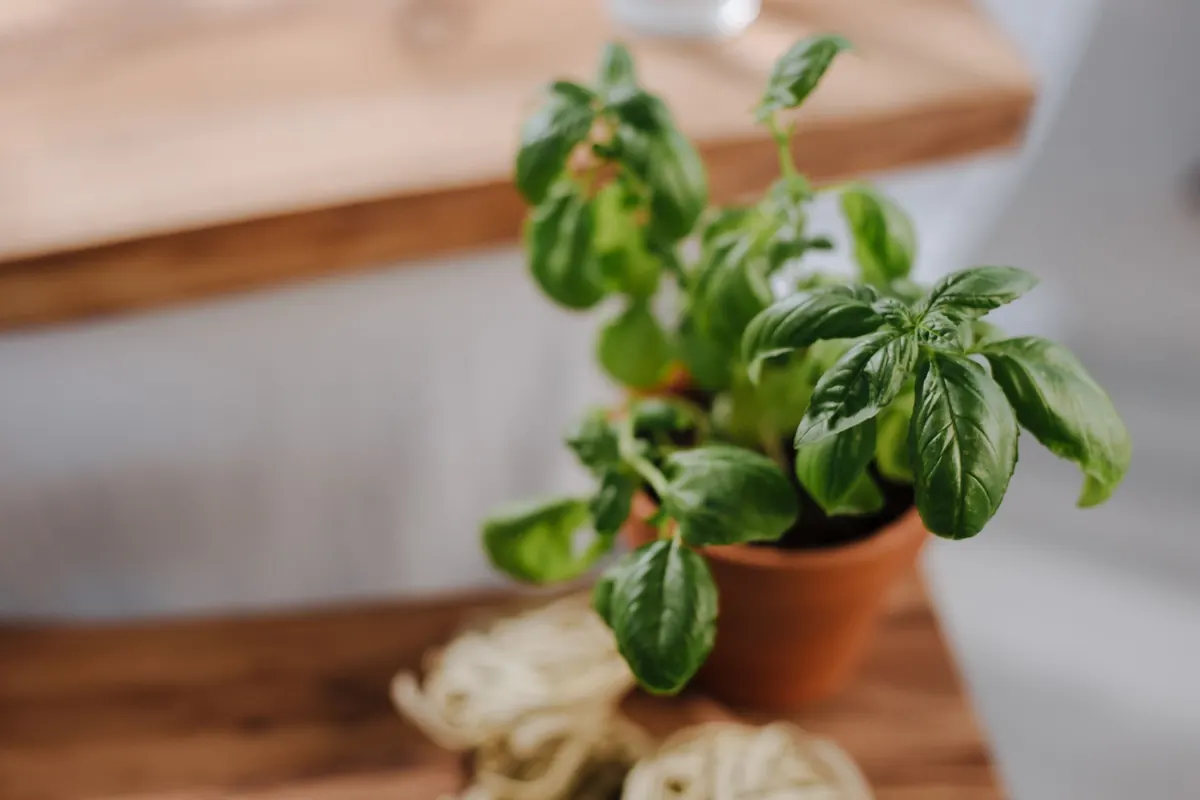
Pick regularly, always from the top, and never take more than a third of the plant at once. Water in the morning, ideally at the base, and keep pots from drying out; basil in a terracotta pot on a sunny patio can need water daily in July. Feed container plants every two or three weeks with a liquid feed at roughly half the recommended strength.
Remove flower buds as soon as you spot them. Once basil flowers, leaf production slows and the flavour sharpens in a way many cooks dislike. For a late crop, sow another pot in June or early July; young plants grow fast in warm weather and often overtake tired older ones. Watch for slugs on young plants, aphids under the leaves, and yellowing foliage with grey fuzz beneath, which points to downy mildew — take off affected leaves and give plants more air rather than crowding them together.
September and October: bringing the season indoors
As nights cool, outdoor basil starts to look tired. Pots are easy: bring them inside to a bright kitchen or conservatory windowsill before the first cold nights and keep picking. Plants in the ground can be lifted, cut back by about a third and potted up; kept watered, they will often crop on a warm windowsill well into November.
Tip cuttings are even more reliable. Take shoots around 10cm long, strip the lower leaves, then stand them in a glass of water or push them into damp compost. Roots usually appear within a fortnight, giving you fresh plants without buying more seed.
The short version
- Sow indoors from late March to July, in warmth and bright light.
- Pot on when true leaves appear, and sow a small pot every three to four weeks.
- Harden off over about ten days before planting out.
- Plant out only when nights stay above 10°C: late May in the south, early June in the north.
- Pinch the tips, pick often, and remove flowers.
- Bring a plant indoors in September to keep the supply going.
Do those six things and basil stops being a supermarket herb you throw half of away, and becomes a plant on your windowsill that earns its place.
Photo: Pexels / Pixabay