Care
Why Are My Basil Leaves Turning Yellow? 7 Causes and Fixes
Basil is a talker. Give it warmth, sun and a drink it can drain away from, and it will reward you with fat, glossy leaves you can barely keep up with. Let one of those three slip and it sulks, usually by turning yellow.
The good news is that basil yellows in fairly predictable ways. Where the yellow starts, whether the veins stay green, and how fast it spreads will point you at the culprit. Read the pattern first, then act.
Read the pattern before you reach for the feed
Look closely at which leaves are affected and how the colour has changed. Most problems announce themselves.
- Lower leaves yellowing first, fading evenly: usually nitrogen hunger, or roots sitting too wet.
- Yellow between the veins while the veins stay green, on older leaves: the classic magnesium shortage.
- New growth yellow with dark green veins: iron, or compost that has drifted alkaline.
- Pale, speckled leaves with webbing or sticky patches: sap-sucking pests.
- Angular yellow patches turning grey and fuzzy underneath: downy mildew.
- Sudden yellowing after a cold night or a move outdoors: cold shock.
That gives you a shortlist. The rest is checking the suspects in order: temperature, water, roots, feed, pests.
1. Cold shock: basil's hard limit
Basil is a tropical herb and makes no apology for it. Below roughly 10°C it stops growing; below about 5°C the leaves yellow, go limp and drop, sometimes within 48 hours. A single cold night on a windowsill, a draughty kitchen, or watering with cold tap water in January can all do it.
Cold damage tends to arrive suddenly and affect the whole plant rather than a few leaves. Move the pot somewhere consistently warm, water at room temperature, and keep plants indoors until night temperatures are reliably in double figures. Harden them off over a week rather than an afternoon. Yellow leaves will not turn green again, so pick them off and judge recovery by the new growth.
2. Soggy roots: the most common cause
If I had to bet on one reason a basil plant goes yellow and sad indoors, it would be overwatering. Basil likes moisture; it does not like sitting in it. Constantly wet compost starves roots of oxygen, they rot, and the plant can no longer take up water — so it looks dry and yellow while the soil is soaking.
The signs are clear enough: yellowing bottom leaves, soft or darkened stems at the base, sour-smelling compost, fungus gnats hovering, roots that are brown and mushy rather than white.
- Stop watering and let the surface dry out. Test the top 2–3cm with your finger before the next drink.
- Empty the saucer. Never leave a pot standing in water for more than a few minutes.
- Check the drainage holes, and lift the pot so it is not sitting flat against a saucer.
- If the compost is sodden and roots are rotting, repot into fresh, free-draining compost, trimming black, mushy roots with clean scissors.
- Water thoroughly but less often. A good soak followed by a proper dry-down suits basil far better than daily dribbles.
3. Nutrient shortfalls — and why feeding is not always the answer
Basil grows fast and, in a small pot, exhausts its compost within weeks. But a yellow plant is not automatically a hungry one, and piling on feed can make things worse if the roots are damaged or the compost is waterlogged.
Nitrogen
Older leaves fade to a uniform pale yellow, new growth is small and thin, and the plant looks washed out. A balanced liquid feed at half strength every week or two through the growing season usually sorts it.
Magnesium
Older leaves turn yellow between the veins while the veins themselves stay green. A diluted Epsom salt spray is a common remedy; follow the dilution on the packet and avoid spraying in strong midday sun.
Iron and alkaline compost
When the newest leaves come through yellow with green veins, iron is often locked up by compost that has turned too alkaline — more likely if you use hard tap water. Repotting into fresh compost is usually the simplest fix. A build-up of fertiliser salts gives similar symptoms, so if you have been feeding heavily, flush the pot through with water and let it drain.
4. Sap-sucking pests hiding under the leaves
Aphids, whitefly, thrips and spider mites all feed on sap, and all of them hide on the undersides. Look for fine webbing, silvery stippling, tiny white or green insects, curled new growth, sticky honeydew on the leaves and sooty mould growing on that stickiness.
Act early. Knock small colonies off with a firm jet of water, bin badly infested leaves, and treat the undersides with insecticidal soap, following the label. Isolate the plant while you deal with it, and water at the base rather than over the foliage — wet leaves and still air invite both pests and disease.
5. Too little light, and a pot that is too small
Basil wants six hours of decent sun a day. On a north-facing windowsill in winter it will yellow, stretch and lose flavour. Move it to the brightest spot you have, and top up with a grow light if the daylight simply is not there.
A root-bound plant also yellows despite your best efforts: water runs straight through, the plant droops soon after a drink, and roots circle the inside of the pot. Move it into a container about 5cm wider with fresh compost and it should pick up within a fortnight.
6. Disease — and plain old age
Downy mildew shows as yellow patches on the upper leaf surface, often bounded by the veins, with grey fuzzy growth underneath. There is no cure, so bin the plant rather than composting it, and improve airflow next time.
Fusarium wilt is rarer and more dramatic: one side of the plant yellows, browns and collapses, with dark streaks inside the stem. Discard the plant and the compost with it.
Remember, too, that a few yellow bottom leaves on an otherwise vigorous plant is normal. Older leaves wear out. Pick off the lowest two or three, pinch out the tips to keep growth bushy, and carry on.
Getting it back on track
For the next two weeks: check the compost with your finger before every watering, keep the plant above 10°C, give it your sunniest spot, feed half-strength every ten days or so if it lives in a pot, and inspect the undersides once a week for pests. Strip off any remaining yellow leaves so you can judge progress honestly.
New growth is your scorecard. If fresh leaves come through green and glossy, whatever you changed is working. Damaged yellow leaves will not turn back — a healthy basil plant is simply one that keeps making more of the good ones.
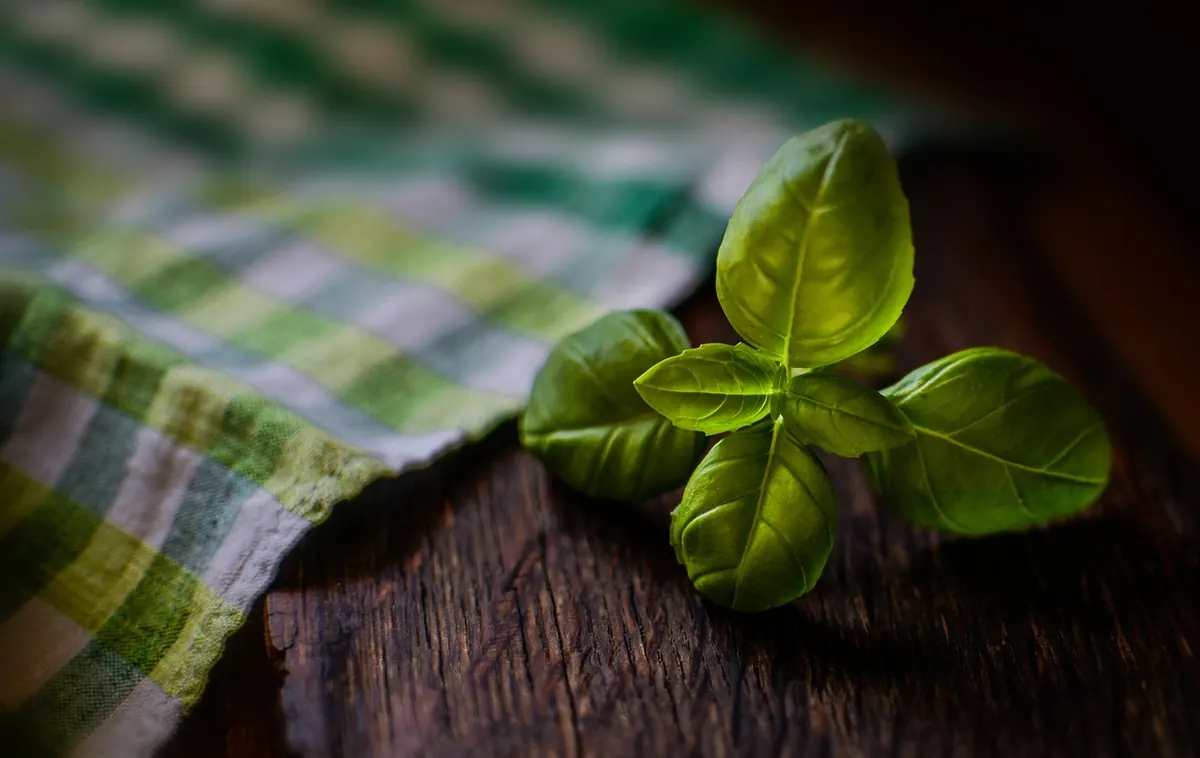
Photo: monicore / Pixabay